From the Rag-and-Bone Man to GIRO: The Enduring Value of Metals
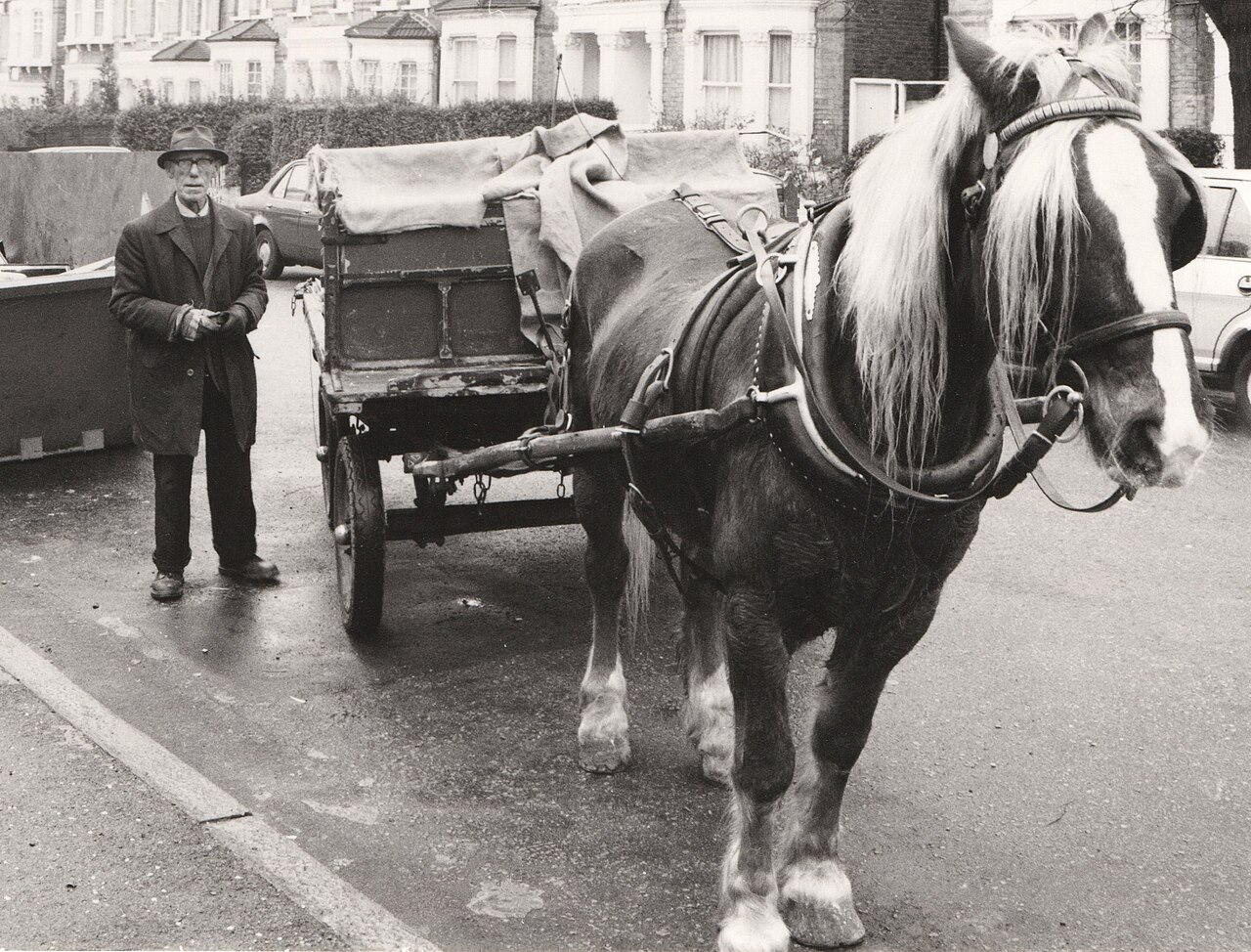
When I was growing up in England, my Nana used to tell me about the rag-and-bone man who would make his way through the neighbourhood calling out, “Any old iron!” as he searched for things people no longer wanted. Old pots and pans, pieces of scrap metal and other unwanted household materials which still had value and could be sold or put to another use.
Rag-and-bone men were once a familiar part of British community life, particularly in working-class neighbourhoods. Long before blue bins and modern recycling programs, people understood that many discarded items still had value.
Today we might call it resource recovery or the circular economy. Back then, it was simply part of everyday life.
In some ways, what we do at GIRO today isn’t so different.
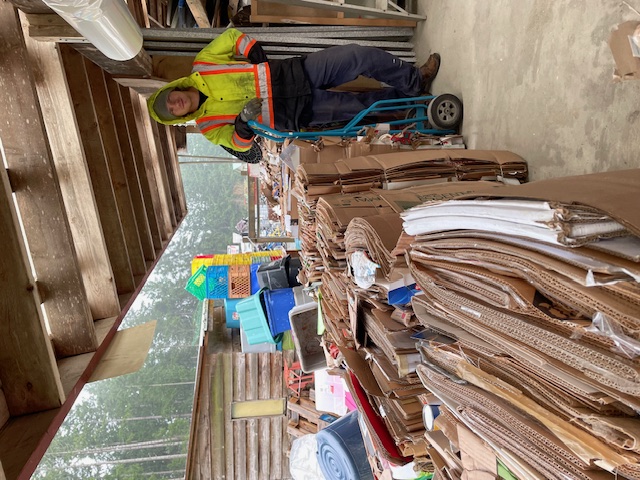
Every week our community brings us copper pipe and electrical wire, brass taps and plumbing fittings, aluminum window frames and siding, and metal pieces salvaged from appliances and electronics.
The object itself may have reached the end of its useful life, but the metal it contains definitely hasn’t.
In my last article about GIRO’s scrap-metal program, I talked about ferrous metals such as steel and the changes occurring in global scrap-metal markets. But we also separate non-ferrous metals—metals that contain little or no iron—including copper, brass and aluminum.
Why are these metals worth separating? To answer that, it helps to understand the properties that made humans choose them in the first place.
Copper — an ancient metal with a very modern problem
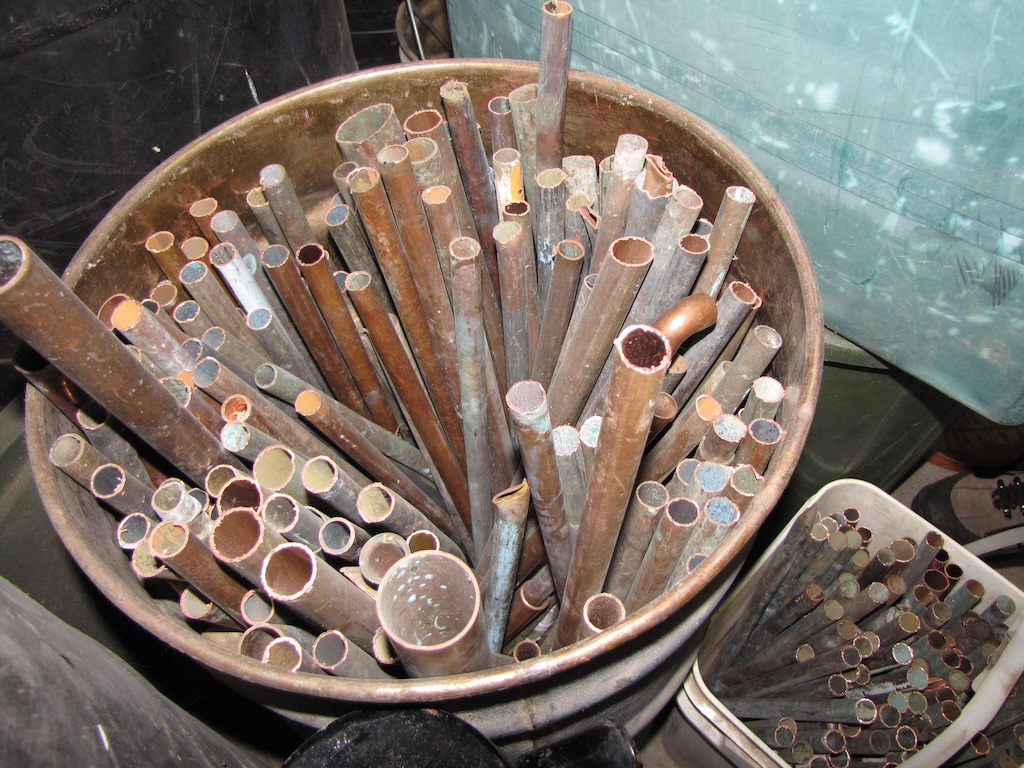
Copper has been important to humans for thousands of years. It was one of the first metals people learned to work because it could be shaped relatively easily. Eventually, people discovered that combining copper with tin created a much harder material—bronze. Its importance was so great that an entire period of human history became known as the Bronze Age.
Thousands of years later, copper has become essential for an entirely different reason: electricity.
Copper is an exceptional conductor of electricity and heat. It is also ductile, meaning it can be drawn into thin wire; malleable, meaning it can be shaped without breaking; and resistant to corrosion.
These properties explain why we find copper in household wiring, electric motors, transformers, electronics, cookware and plumbing.
Why is the world’s demand for copper growing so rapidly?
This is where that old piece of copper pipe sitting in the GIRO metal pile connects to a much bigger global story.
The world is becoming increasingly electrified. Electric vehicles, charging stations, solar and wind installations, and expanding electrical grids all require substantial amounts of copper.
And now there is another rapidly growing demand: data centers and artificial intelligence.
The computers inside data centers need copper, as does the infrastructure delivering electricity to them—power lines, substations, transformers and cabling.
According to a 2026 study by S&P Global, worldwide copper demand could increase from approximately 28 million tonnes in 2025 to 42 million tonnes by 2040. That’s a 50% increase in just 15 years.
Why don’t we just mine more?
We will need more copper mining because recycling alone cannot meet future demand. But developing new mines can take many years, and declining ore grades in existing older mines mean more rock must be processed to recover the same amount of copper.
Mining also requires land, water and energy and can have significant environmental impacts. Recovering copper already in circulation helps reduce the need for additional extraction.
That short piece of copper pipe left over from a plumbing project might not seem particularly important. Neither might an old extension cord or electric motor.
But collectively, recovering copper that has already been mined means that metal can return to the resource stream rather than being lost to landfill.
The easiest metal to mine is the metal we’ve already mined.
Brass — when two metals are better together
Brass gives us another interesting lesson in how humans learned to manipulate the properties of metals.
Brass is an alloy, made primarily by combining copper and zinc. By combining metals, we can create a material with characteristics different from either metal on its own.
Centuries ago, people discovered that combining copper and zinc produced an attractive golden-coloured material that was harder than copper while still being relatively easy to shape, cast and machine.
Those characteristics explain why we see so much brass associated with plumbing.
Look around GIRO and you may find old taps, valves, couplings, hose fittings, door handles, locks, keys and other hardware containing brass.
Brass is strong, durable and resistant to corrosion from water. It can also be cast into complicated shapes and machined to create threads and valves—all useful properties for plumbing fittings expected to work reliably for years.
And when that old tap finally reaches the end of its life, the copper and zinc contained within it still have value.
What can I do? Don’t assume an old brass tap, valve or fitting is garbage. Bring it to GIRO where it will be properly recycled.
Aluminum — from luxury metal to everyday material
Today aluminum is so common that we hardly give it a second thought. We find it in window frames, siding, gutters, ladders, cookware, bicycles, vehicles and electronics.
But aluminum wasn’t always commonplace.
Although aluminum is abundant in the Earth’s crust, separating it from the minerals in which it occurs proved extremely difficult. During part of the 19th century, producing metallic aluminum was so expensive that it was regarded as an exotic material.
The development of industrial production processes in the late 1800s changed everything.
Aluminum is lightweight—roughly one-third the density of steel—yet can be made quite strong. It naturally forms a protective layer that helps resist corrosion, is easy to manufacture into different shapes and is a good conductor of heat.
These properties make it ideal for window frames and siding exposed to the weather, and for reducing the weight of vehicles and planes.
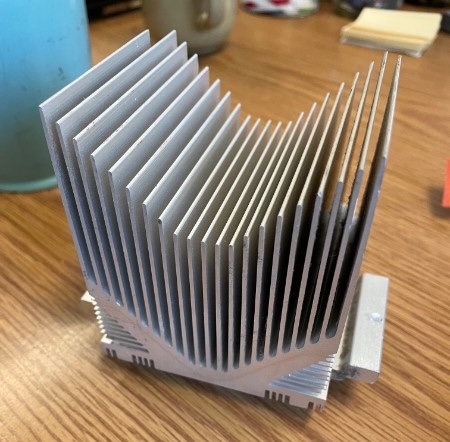
This photo shows an interesting piece of metal I recently salvaged from a microwave at GIRO: a large aluminum heat sink.
A heat sink draws heat away from electronic components. Its closely spaced fins increase the surface area, allowing heat to dissipate into the surrounding air and helping prevent overheating.
Aluminum is particularly well suited to this job because it conducts heat efficiently and can be manufactured into complex shapes.
Aluminum’s remarkable recycling advantage
Producing new aluminum from mined bauxite requires an enormous amount of energy. Recycling aluminum saves approximately 95% of the energy required to produce primary aluminum from raw materials.
That’s an extraordinary saving when we consider how much aluminum is used around the world.
An old aluminum window frame or a pop can isn’t simply scrap. It represents metal, mining, processing and energy that have already been invested.
What can I do? Make sure aluminum siding, frames, cookware and other aluminum objects get dropped off at GIRO.
The value comes back to our community
There is another important reason GIRO separates and recovers these metals. The revenue they generate helps support our recycling operation and offset the costs of recycling other materials.
Between 2018 and 2025, GIRO received $66,047 from the sale of recovered non-ferrous metals, averaging approximately $8,250 annually.
While some recyclable materials have a resale value, others actually cost GIRO money to transport and process. Cardboard, for example, currently costs GIRO approximately $700 per month, or $8,400 annually, to have recycled.
Interestingly, our average annual revenue from non-ferrous metals has been almost enough to cover a year’s cardboard processing costs.
This is one example of how GIRO adapts to changing global recycling markets. By recovering value from some materials, we can help offset the costs of recycling others and continue providing a wide range of services to our community.
When residents bring us their old copper pipe, brass fittings and aluminum, they are doing more than keeping valuable resources out of the landfill. They are also helping support other important recycling services.
It’s a great example of how the value of one recovered resource can help support the responsible recycling of another.
From the rag-and-bone man to GIRO
My Nana’s stories about the rag-and-bone man came from a very different time. There were no blue bins, and nobody talked about the circular economy. But people understood that an old pot or piece of metal wasn’t necessarily worthless simply because its original owner no longer needed it.
Today, recovering those materials is more important than ever.
We are electrifying transportation and energy systems, building enormous new digital infrastructure and consuming more resources than ever before. All those materials ultimately have to come from somewhere.
As individuals, we cannot determine how many electric vehicles will be built, how many data centers the world will need or where the next copper mine will be developed.
But we do have control over what happens to the metals already in our hands.
Once we have gone to the enormous effort of extracting a metal from the Earth, refining it and turning it into something useful, it makes very little sense to throw that resource away.
The object may have reached the end of its useful life. The metal has not.
If you have any questions about any materials, please speak to the recycling crew and they will be happy to help.
Michelle Kresnyak

About Post Author