How Changing Global Markets Are Shaping GIRO’s Metal Recycling Program
The Gabriola Island Recycling Organization (GIRO) offers a wide range of recycling services to our community — from light bulbs and paint through Product Care, to household batteries through Call2Recycle, and more recently Styrofoam and flexible plastics through Recycle BC.
One of our longest-running services is scrap metal recycling, a program that has helped remove well over one million pounds of scrap metal from Gabriola Island over the years.
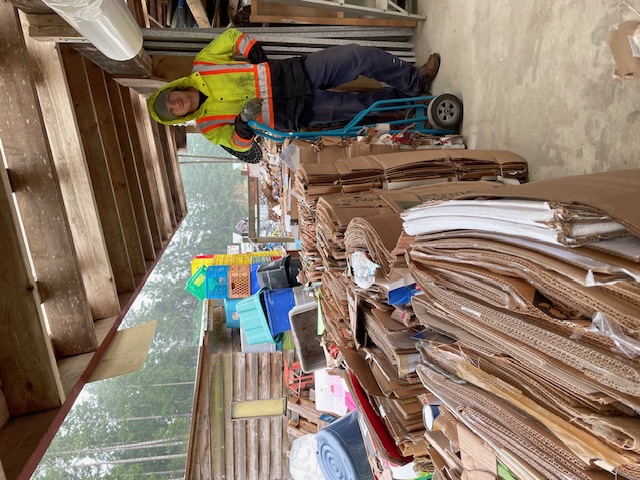
The volume continues to be remarkable. GIRO’s 40-yard scrap metal bin is typically filled and exchanged for an empty bin approximately every two weeks. That’s a lot of metal leaving a relatively small island — everything from rusty fencing, roofing material, bolts and nails to hot water tanks and, historically, household appliances.
While the program is clearly valued and heavily used by the community, keeping it financially sustainable has become increasingly challenging.
THE TRUE COST OF MOVING METAL OFF-ISLAND
As with most recycling programs on Gabriola, there is a cost involved in getting materials off island. For scrap metal, GIRO pays a $600 transfer fee every time the bin is picked up and exchanged.
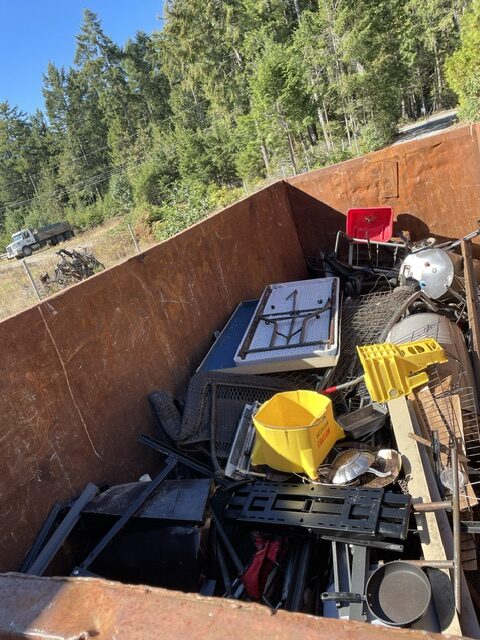
The scrap metal bin is intended for ferrous metal — metal that contains iron and is magnetic. A simple way to identify it is with a magnet: if the magnet sticks, the material is generally considered ferrous scrap metal. GIRO’s recycling crew always keeps magnets on hand to check materials when we’re unsure. Aluminum, copper and brass are non-ferrous metals and are separated at GIRO and handled through different recycling streams.
Historically, however, large household appliances were also placed in the scrap metal bin. Although appliances contain recyclable steel, many — particularly fridges and freezers — also contain significant amounts of plastic and other materials. Their large size combined with relatively low weight meant they occupied a considerable amount of valuable bin space without adding a corresponding amount of recyclable ferrous metal.
In other words, we were often transporting a lot of volume without a lot of weight.
That matters because the value GIRO receives for scrap metal is largely determined by the weight of the ferrous metal being shipped. When a 40-yard bin costs $600 just to move off island, every pound counts.
Depending on scrap metal prices, GIRO may earn a small amount from a load or absorb a loss. The fees charged to customers for some metal items are therefore not intended to generate a profit; they help offset the unavoidable costs of providing the service.
GIRO has maintained a long-standing relationship with ABC Scrap Metal, a Canadian-owned company that has supported us through fluctuating markets. Despite GIRO being open only two days a week, the volume of material collected makes us a significant customer.
WHEN METAL MARKETS CHANGED
In early 2025, changes in U.S. tariffs and increasing uncertainty in Canada-U.S. trade coincided with further volatility in scrap metal markets.
The prices GIRO received for ferrous scrap dropped significantly. Combined with the cost of transporting relatively low-density loads containing large appliances, the economics became increasingly difficult, and at times the scrap metal bin was operating at a substantial loss.
Fortunately, GIRO’s recycling staff had already begun exploring ways to manage some of these materials differently.
Two programs have since made a significant difference.
SMALL APPLIANCES & ELECTRONICS
Over the past year, GIRO officially joined an electronics and small-appliance recycling program through the Electronic Products Recycling Association (EPRA).
The program accepts all types of electronics and small appliances — from computers and televisions to microwaves, toasters, kettles and other household appliances. A simple way to think about it is: if it has a cord, chances are it belongs in this recycling stream rather than the scrap metal bin.
Previously, many small appliances ended up in GIRO’s ferrous scrap metal bin. They took up valuable space while often containing significant amounts of plastic and other non-metal components.
Now these products can be separated and recycled through a dedicated program, and GIRO receives approximately $260 per tonne of material collected.
This is a significant improvement over putting these items into the scrap metal bin, where GIRO pays to have the bin transported off island and the value of the load depends largely on the weight of the ferrous metal it contains.
MAJOR APPLIANCE RECYCLING ROUNDTABLE (MARR)
The second major improvement came through GIRO joining the Major Appliance Recycling Roundtable (MARR).
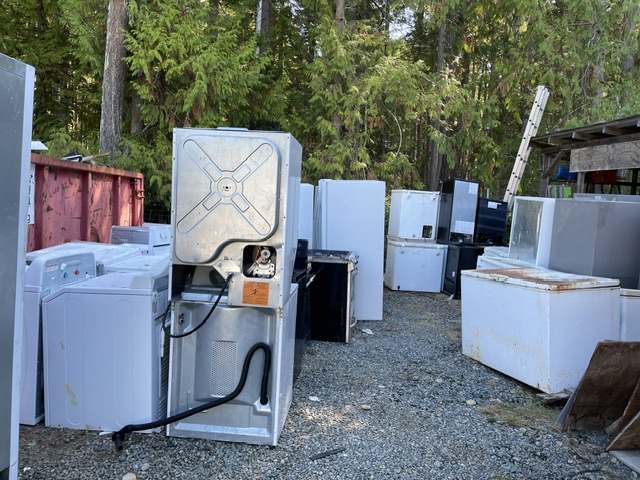
Through this program, GIRO now has a dedicated 40-yard bin for major appliances, including fridges, freezers, stoves, washers and other eligible large appliances.
Previously, these appliances went into our 40-yard scrap metal bin. Fridges and freezers in particular occupied a great deal of space relative to their weight — essentially creating large pockets of low-density material within the load.
Separating major appliances has had an immediate effect.
Since removing them from the ferrous scrap metal bin, the average weight of GIRO’s scrap metal loads has increased by approximately 1,500 to 2,000 pounds per load.
That means the same 40-yard bin is now carrying considerably more recyclable ferrous metal each time GIRO pays to have it transported off island.
Together, EPRA and MARR have fundamentally changed the way GIRO manages metal-containing products. Electronics and small appliances can be directed into the EPRA stream, major appliances into MARR, and the existing scrap metal bin can be used more efficiently for heavier ferrous metals.
The result is better material separation, less wasted bin space and a more efficient use of every scrap metal load leaving Gabriola.
MARR also covers the transportation costs associated with its appliance recycling program, which means GIRO no longer has to charge residents to drop off appliances covered by the program.
One requirement is the safe removal of refrigerants from fridges and freezers before recycling. GIRO staff have now been fully trained to perform this work on site — another step forward in providing responsible recycling services locally.
ADAPTING TO A CHANGING WORLD
Helping islanders reduce, reuse, repurpose and recycle has always been central to GIRO’s mandate, and scrap metal recycling remains an important part of that mission.
A 40-yard metal bin leaving GIRO approximately every two weeks demonstrates just how much material Gabriolans are keeping out of the waste stream through this one program alone.
Global commodity markets and international trade policies are beyond GIRO’s control. What we can control is how we respond.
By finding better recycling streams for electronics, small appliances and major appliances, GIRO has been able to reduce pressure on the scrap metal program, improve the efficiency of every load and continue providing an important recycling service to the island.
As recycling markets continue to change, GIRO will continue looking for practical ways to keep materials out of landfill, manage costs responsibly and provide Gabriola with the best recycling services we can.
Thank you for your continued support of GIRO and for helping us keep these valuable materials out of the waste stream. If you’re dropping off an appliance or electronic item of any size, please speak with a member of our recycling crew first. They’ll make sure your item is directed to the correct recycling stream.

About Post Author